
Hard braking rises in all 50 states in October, when pedestrian crashes peak
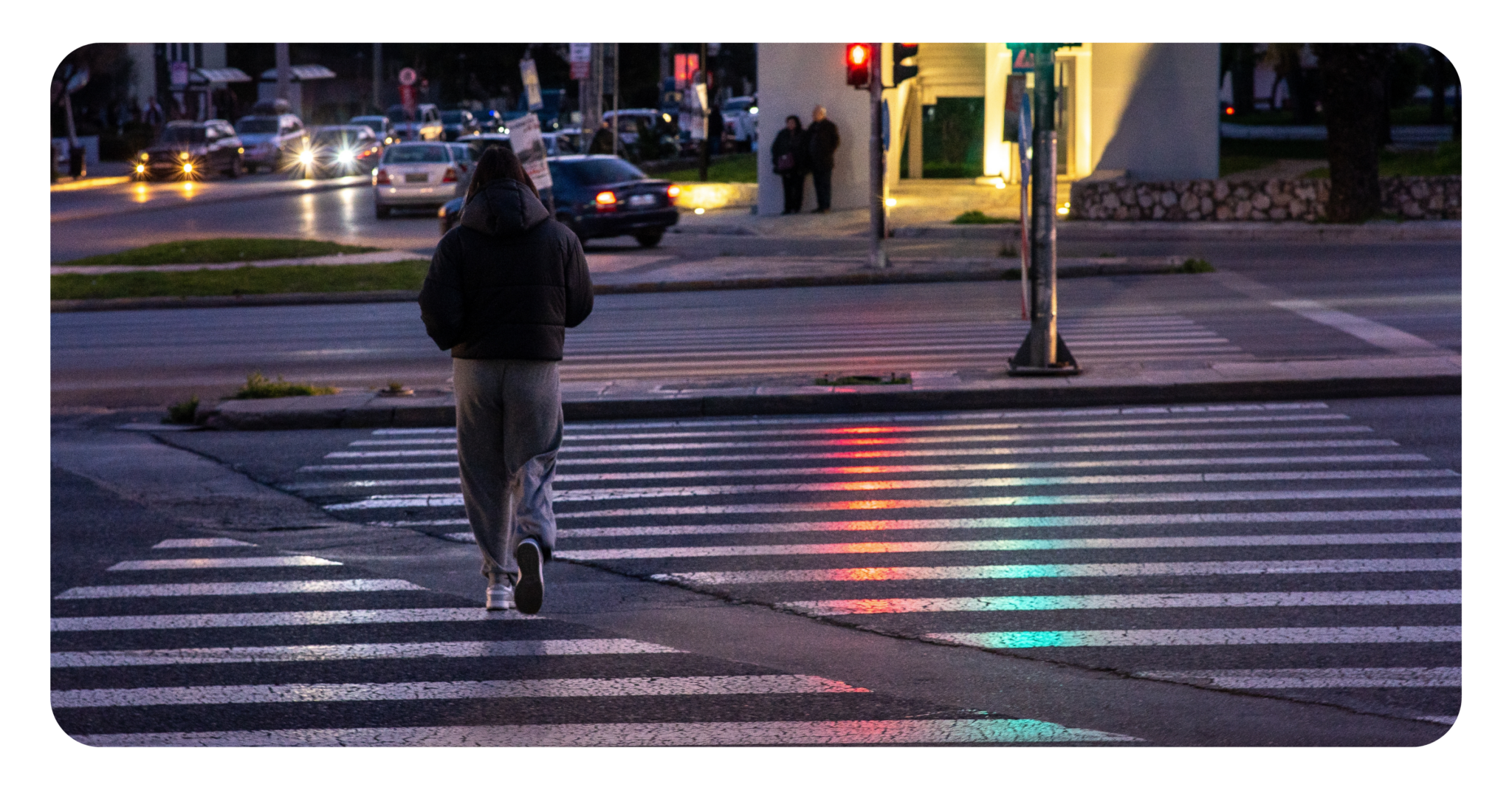
October is National Pedestrian Safety Month, when the United States Department of Transportation (USDOT) and the National Highway Traffic Safety Administration (NHTSA) highlight the risks pedestrians face on US roads. It’s also the most dangerous month for pedestrians.
Federal crash data shows that October has more pedestrian crashes involving fatalities and injuries than any other month. Our latest analysis found a similar pattern in driving behavior. Hard braking — a behavior that predicts higher crash and claims rates — peaks in October too.
Nationally, hard braking rates were 6% above the annual average in October, with above-average rates in all 50 states.
October has 27% more pedestrian crashes with fatalities and injuries than the average month
According to NHTSA's Fatality and Injury Reporting System Tool (FIRST), October averaged 7,288 fatal and estimated injury-only pedestrian crashes between 2020 and 2024 — 27% above the average month, and the highest of any month. That’s 235 serious crashes a day, 25% higher than the annual daily average.
Across the five years analyzed, October recorded 36,440 fatal and injury-only pedestrian crashes — the highest of any month.
The spike is part of a larger seasonal pattern. Pedestrian crashes rise from late summer into fall, peak in October, and stay elevated through November and December. From 2020 through 2024, October through December averaged 6,828 fatal and estimated injury-only pedestrian crashes per month, 27% higher than the monthly average for the other nine months.
Shorter fall days with less daylight may contribute to this risk. More travel happens after dark, when pedestrians are harder to see. According to NHTSA, 76% of pedestrian fatalities in 2024 occurred in darkness. As winter weather sets in, fewer pedestrians may be out walking, reducing exposure to traffic.
October sees 6% more hard braking than the average month
Monthly Index of Pedestrian Crashes and National Hard Braking
The rise in pedestrian crashes also raises questions about how driving behavior changes during October.
Using StreetVision, CMT.AI’s road safety platform, we analyzed hard braking events per 100 miles nationwide from June 2025 through May 2026. Hard braking can indicate moments when drivers need to react quickly to avoid a potential collision. While not every hard braking event represents a near miss, CMT.AI research has found that drivers with the highest rates of hard braking are 1.7 times more likely to be involved in a crash.
Drivers averaged 3.44 hard-braking events per 100 miles in October, 6% above the 3.25 annual average. Rates climbed through the fall — from 3.27 in August to 3.39 in September to 3.44 in October. That 5.2% rise from August to October mirrors the seasonal buildup in pedestrian crashes.
To compare these seasonal patterns, we indexed pedestrian crashes and hard braking rates against their annual averages. An index of 100 represents the average for each measure, with values above 100 indicating higher-than-average levels. Both measures rise heading into fall and reach their highest levels in October.
Top 10 States With the Largest October Increase in Hard Braking
Month When Each State’s Hard-Braking Rate Is Highest
Number of States by October Increase in Hard Braking
The pattern extended across the country. All 50 states had higher hard braking rates in October than their annual averages. October recorded the highest rate of the year in 29 states and ranked among the top three months in 47 states. September also stood out, ranking first in 8 states and among the top three months in 32 states.
In 30 states, October rates ran at least 5% above average. In 12 states, rates ran at least 10% higher. Six states were at least 15% above average. Alaska had the largest difference at 56%, followed by North Dakota at 24.2%, Vermont at 18.8%, and Michigan at 17.6%.
Across the country, drivers were braking suddenly more often during the same month that pedestrian crashes reached their highest levels.
Understanding the risks before crashes happen
Hard braking and serious pedestrian crashes both peak in October, showing how changes in driving behavior can signal periods of elevated crash risk. These patterns can help communities recognize potential danger without relying solely on crash records.