

ROAD SAFETY ANAYLSIS
Georgia Road Safety Analysis
Behavioral Insights Powered by StreetVision
The following road safety report evaluates road risk events in Georgia from January through March 2026. It examines phone distraction rates, intersection-level hard braking activity, and corridor-level speeding patterns to determine where risk is most concentrated.
The report leverages insights from CMT’s StreetVision, an AI-powered behavioral analytics platform that provides decision-ready insights into roadway risk before crashes occur. Transportation officials use StreetVision to identify hotspots, prioritize high-impact safety interventions, and evaluate the effectiveness of countermeasures.
Here is a snapshot of our findings — covering distraction benchmarking, county-level concentration analysis, high-risk intersection identification, and corridor speeding patterns.
01 PHONE DISTRACTION
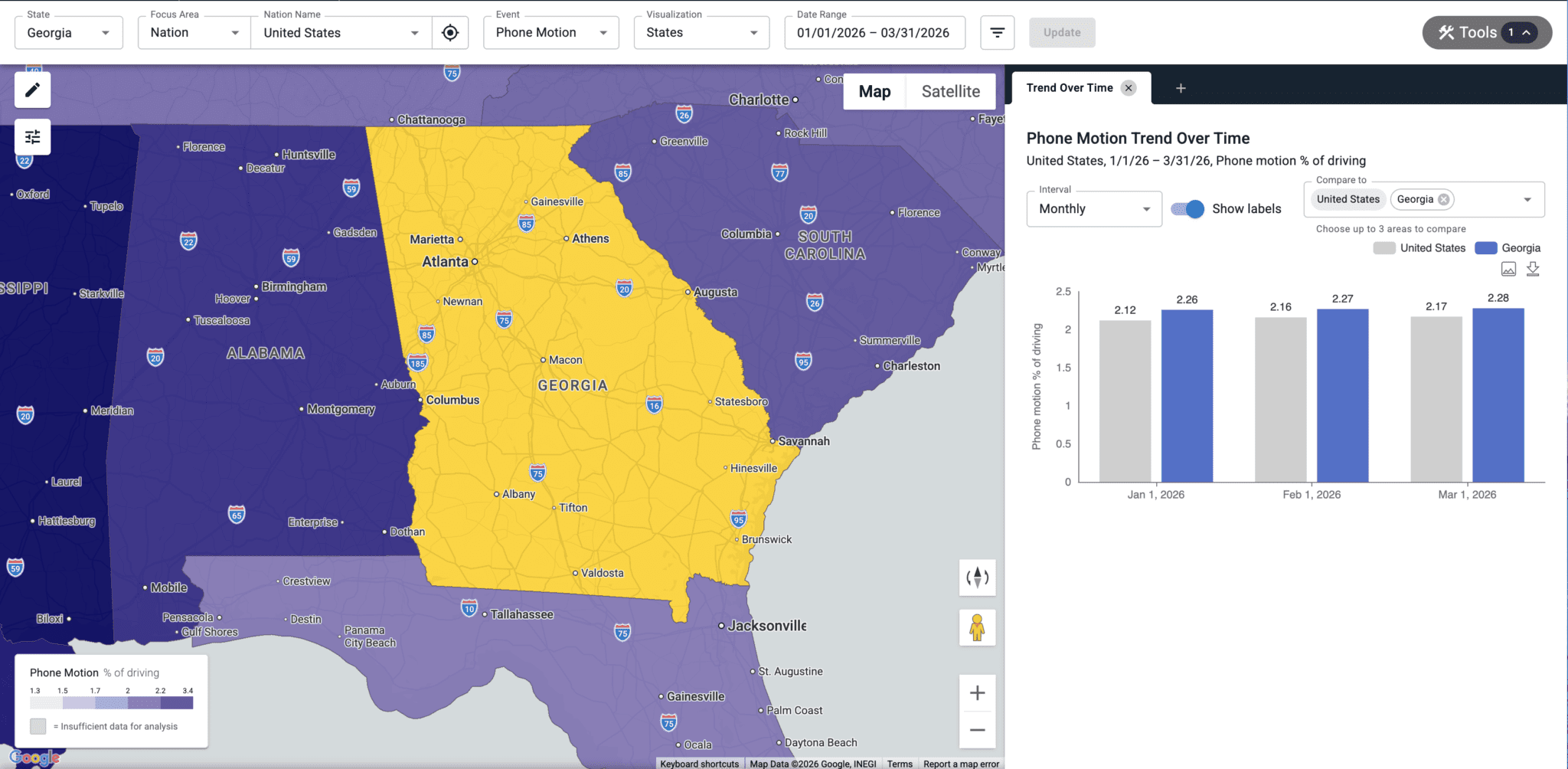
Monthly distraction rates: A comparison to the national benchmark
In January 2026, phone distraction accounted for 2.26% of driving time in Georgia vs. the national average of 2.12%, putting the state 6.6% above the U.S. benchmark.
In February and March, the rate was 2.27 and 2.28%, a slight increase from January. It remained 5.1% above the national average.
Phone motion distraction (% of driving)
02 COUNTY ANALYSIS
County-level insights reveal concentrated rates of distracted driving
Across the three-month period, Georgia drivers averaged 23.8 phone-tapping events per 100 miles driven, though county-level data shows wide variation around that benchmark.
The most distracted counties, led by Ware, Ben Hill, and Coffee, recorded distraction rates roughly 30-35% above the state average, highlighting concentrated pockets of elevated risk.
In contrast, the least distracted counties, led by McIntosh, Turner, and Taliaferro, reported rates about 30-37% below the statewide average, underscoring a clear regional divide in driver behavior.
phone tapping events
Highest Distraction
Ware County
32.2
+35.3%Ben Hill County
32.1
+34.9%Coffee County
31.1
+30.7%Calhoun County
31.1
30.7%Jeff Davis County
31
+30.2%Lowest Distraction
McIntosh County
14.8
37.8%Turner County
15.9
33.2%Taliaferro County
16
32.8%Monroe County
16.3
31.5%Dooly County
16.5
30.7%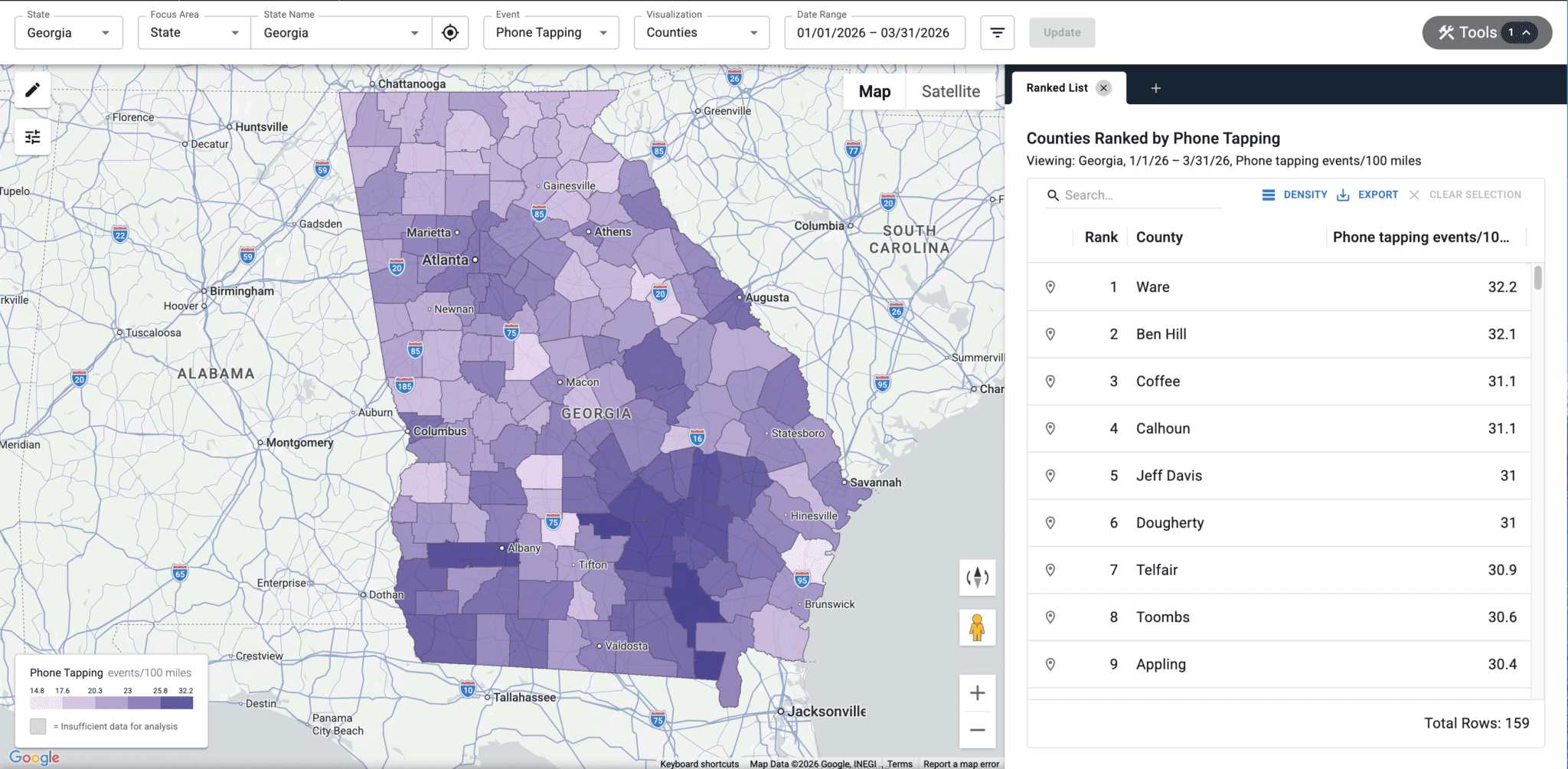
03 HARD BRAKING
High risk intersections: Where hard braking signals elevated crash risk
Intersections account for roughly 25% of all US traffic deaths and 50% of all traffic injuries. Hard braking often signals near-miss events, making it a leading indicator of elevated crash risk.
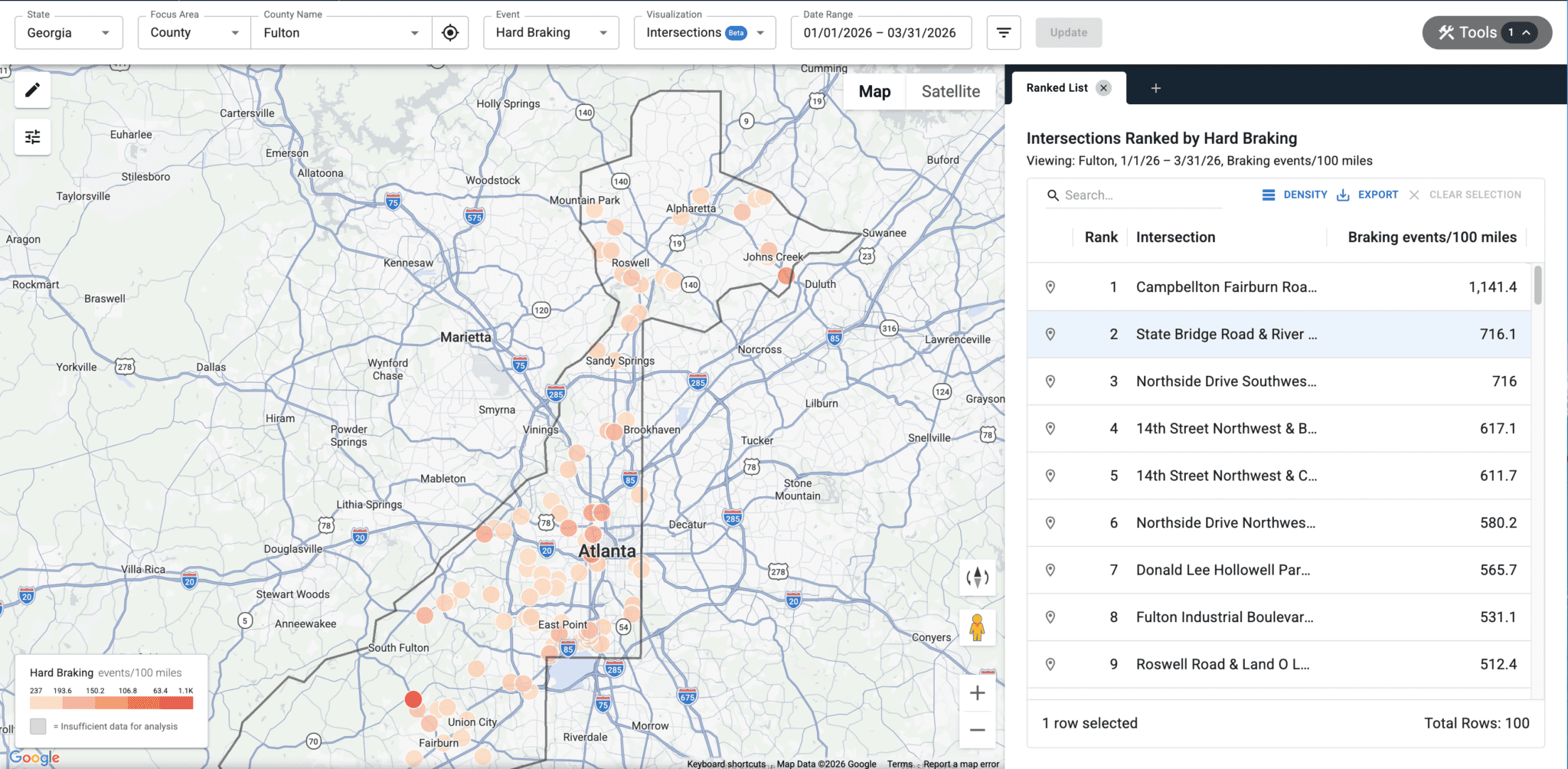
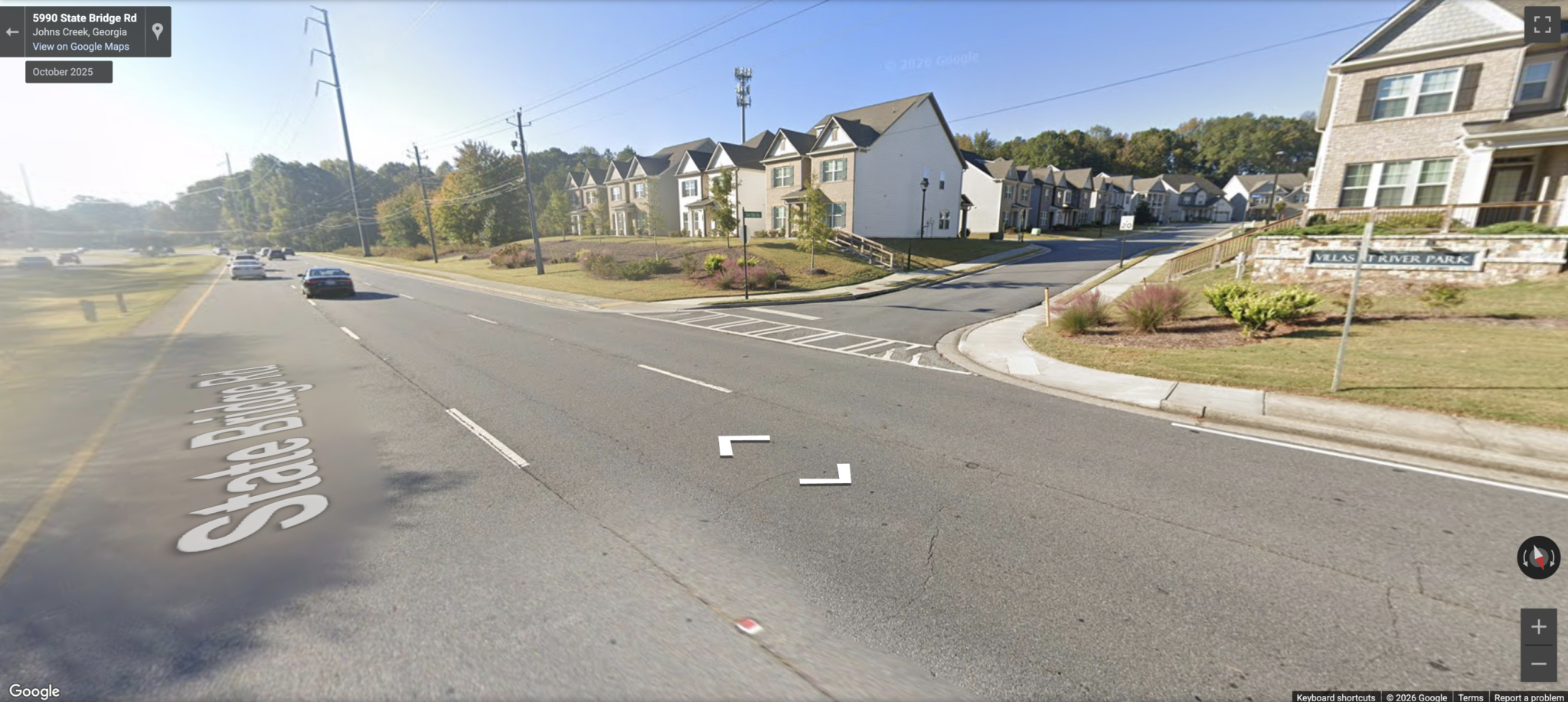
An analysis of Fulton County intersections found State Bridge Road and River Ben Way to be a high-risk hotspot, with 716 hard braking events per 100 miles driven.
highest risk
State Bridge Road & River Bend Way
716
hard braking events / 100 mi
other high risk intersections in Georgia
Northside Dr SW & Hills Ave SW
716
14th Street NW & Barnes St SW
617
14th St NW & Curran St NW
612
Locations with persistently high hard braking activity are widely recognized as candidates for proactive intervention — where targeted engineering improvements, enforcement visibility, or behavioral countermeasures may reduce crash risk before crashes occur.
04 SPEEDING PATTERNS
When & Where Speeding Risk Peaks
Speeding behavior in Georgia follows identifiable time-of-day and corridor-level patterns, creating predictable windows of elevated risk.
On Fulton Industrial Boulevard (45 mph), speeding peaks on Sunday from 2:00 –3:00 p.m., when 60% of driving time exceeds the limit by 5 mph. Another notable spike occurs on Saturdays from 5:00 – 6:00 p.m., when over 51% of travel is above the posted speed.
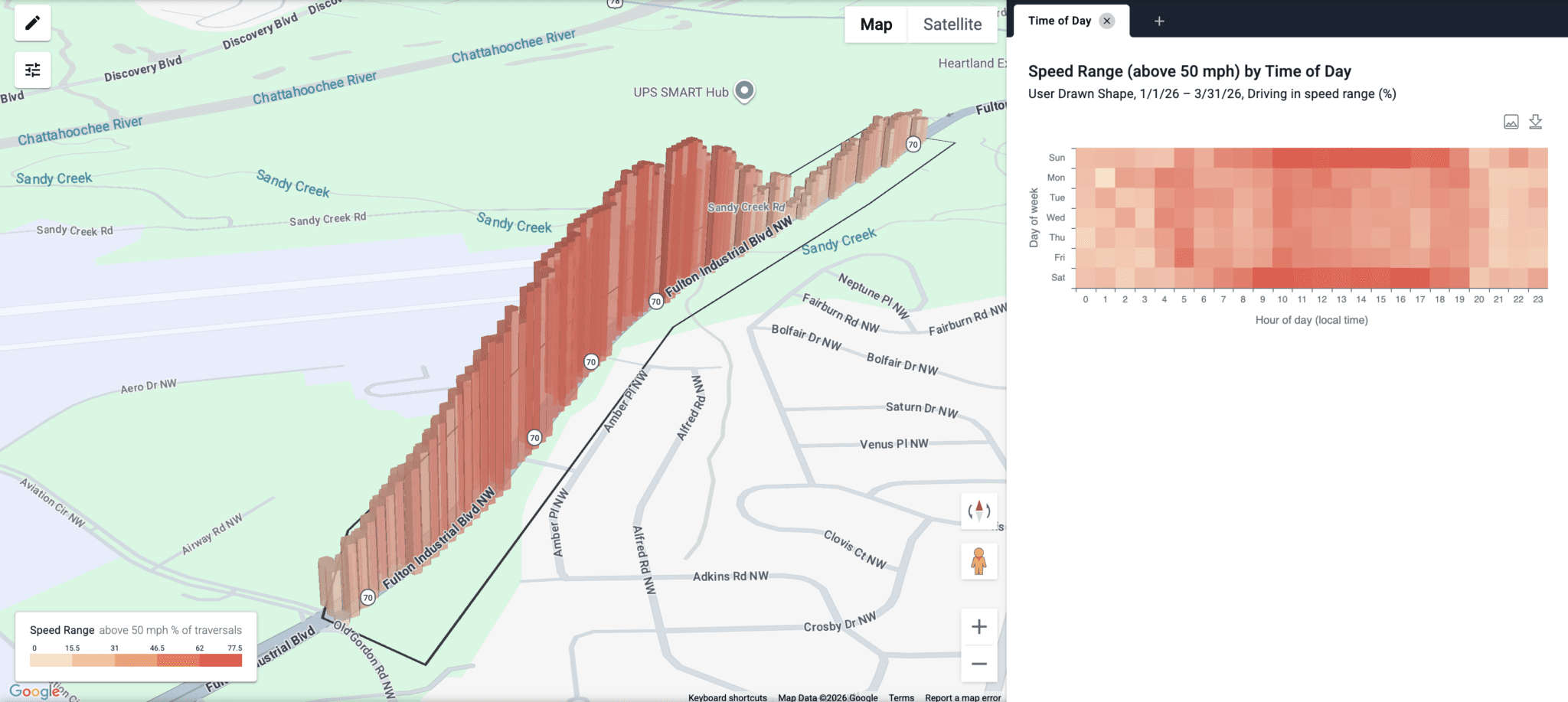
CORRIDOR ANALYSIS
Fulton Industrial Boulevard
Posted speed limit: 45 mph
Sunday 2:00 PM- 3:00 PM
60%
of driving time exceeds the posted speed limit – highest risk window
Saturday 5:00 PM - 6:00 PM
51%
of travel is above posted speed
These patterns provide actionable intelligence for speed studies, high-visibility enforcement, public awareness campaigns, and resource allocation decisions.
05 SCHOOL ZONES
How fast are drivers going in school zones?
We analyzed speed distribution in the school zone at Westchester Elementary School on Scott Boulevard in Decatur, Georgia, focusing on weekdays from 6:00 a.m. to 6:00 p.m. Our analysis found that 43% of drivers exceed the 25 mph limit during active school zone hours.
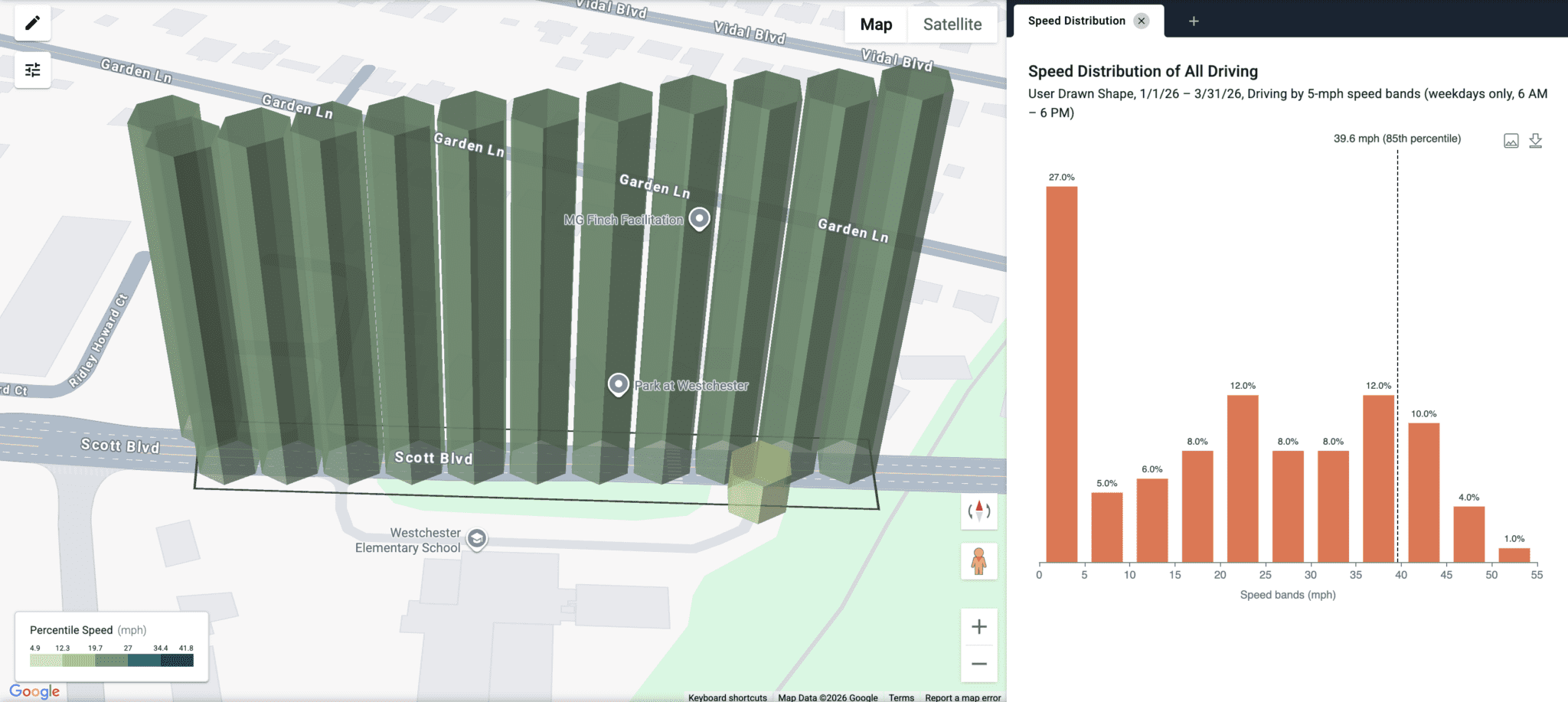
Understanding how frequently speeding occurs during school hours helps traffic engineers determine whether stronger safety measures are needed to better protect vulnerable road users.
StreetVision: The Future of Roadway Safety
You know your roads. Now see what you don't.
See how AI behavioral analytics can help you understand where risk is emerging, why it occurs, and what to do next.