
Road Risk Alert UK: Distraction’s up 40% on Christmas. Speeding surges 8x in the morning
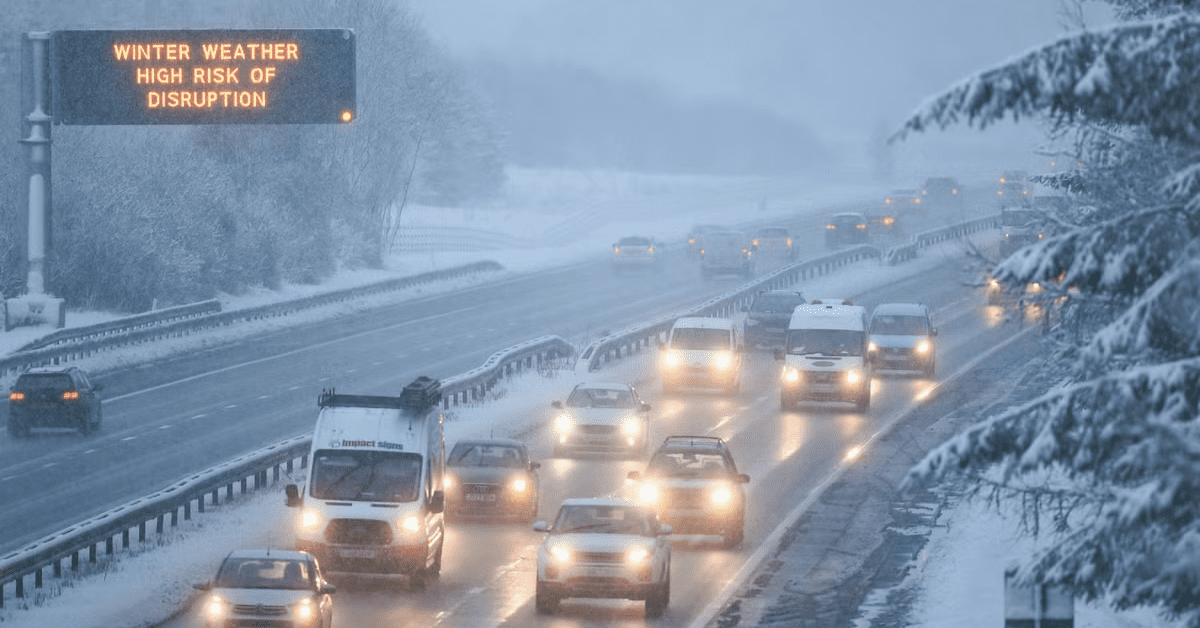
Every year, millions of UK drivers make Christmas getaway journeys. Last year, CMT recorded 23 million trips over the Christmas period. A third of those occurred on the final week before the 25th as drivers traveled to see friends and family. This surge in travel creates a more hectic driving environment, and a significant rise in road risk. Admiral’s accident data shows that December includes 6 of the 10 worst days for crashes in the year.
To understand how road risk changes during the holiday season, we looked at hour-by-hour distraction and speeding trends on Christmas and New Year’s Day in 2024, comparing it with similar days around the holidays in December and January.
CMT defines screen interaction distraction as tapping on the phone screen while driving over 9 mph, and speeding as traveling 9.3 mph over the speed limit for at least 100 meters, the length of a football field.
82% distracted driving gap at 8:00 am on Christmas
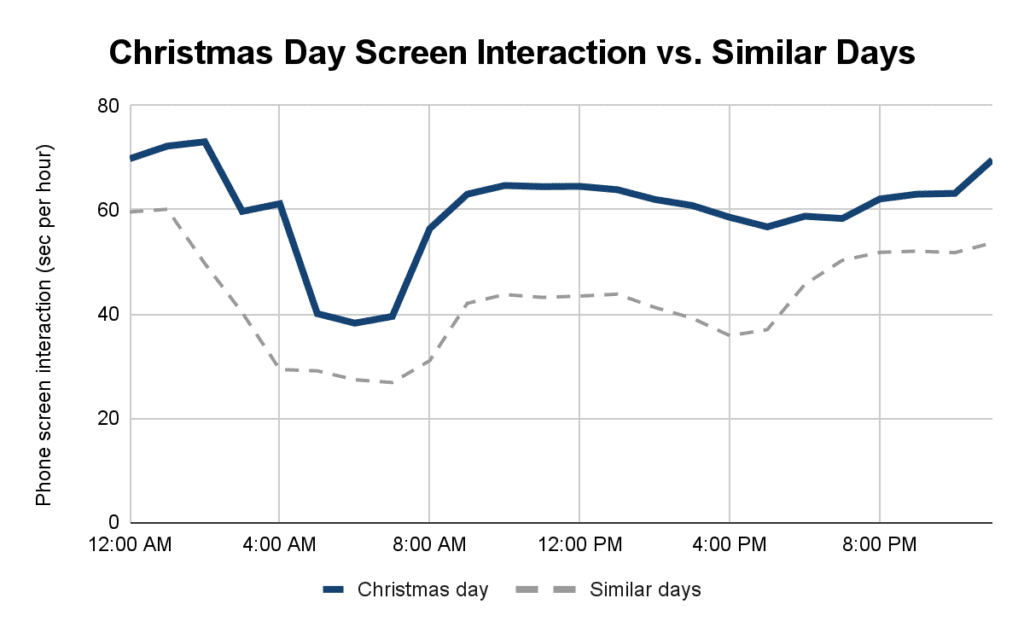
Christmas is one of the most distracted driving days of the year, with drivers 40% more distracted than usual. The surge starts as people head home from Christmas Eve festivities. As the 12 bells of Christmas ring at midnight, distraction climbs sharply, rising 17% above normal. Between midnight and 3:00 am, late-night drivers are distracted for 1 minute and 9 seconds per driving hour, up from 52 seconds, a 31% jump. By 4:00 am, distraction skyrockets to 61 seconds per driving hour, 108% higher than the typical 26 seconds.
Distraction stays elevated throughout Christmas morning. At 8:00 am, it’s 82% higher than average. And in the hour before the typical Christmas dinner time — 11:00 am to noon — when traffic is at its highest point in the day, distraction hits its daytime peak at nearly 1 minute and 5 seconds per driving hour. Throughout the afternoon, from 2:00 pm to 5:00 pm, distraction remains over 55% above average.
8:00 am sees Christmas 810% speeding spike
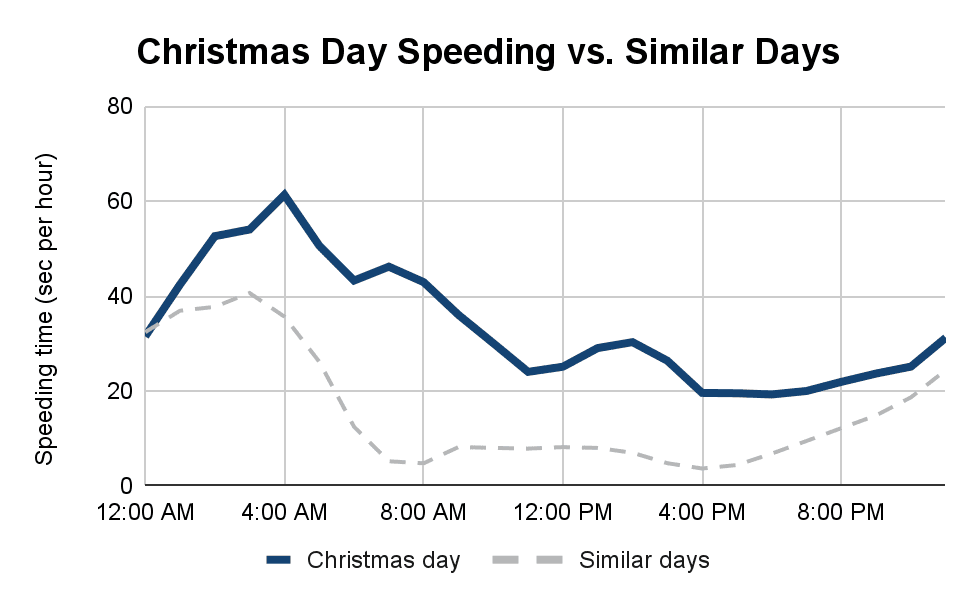
Speeding rises 114% throughout the day on Christmas. A typical day over the holiday period sees about 16 seconds of speeding per driving hour while on Christmas that figure reaches 34 seconds. Like distraction, the rise in speeding starts in the early morning hours after Christmas Eve. Between 12:00 am and 3:00 am, speeding rises by 22%. Speeding reaches its peak for the day at 4:00 am at 61 seconds per hour.
After this initial jump, Christmas Day sees dramatic increases in speeding compared to typical days. From 6:00 am to 1:00 pm, speeding is up 344%, with an astonishing spike of 810% at 8:00 am. Later in the afternoon, between 2:00 pm and 4:00 pm, speeding time is 398% more than normal as families return home.
Drivers spend 39% more time distracted on New Year’s Day
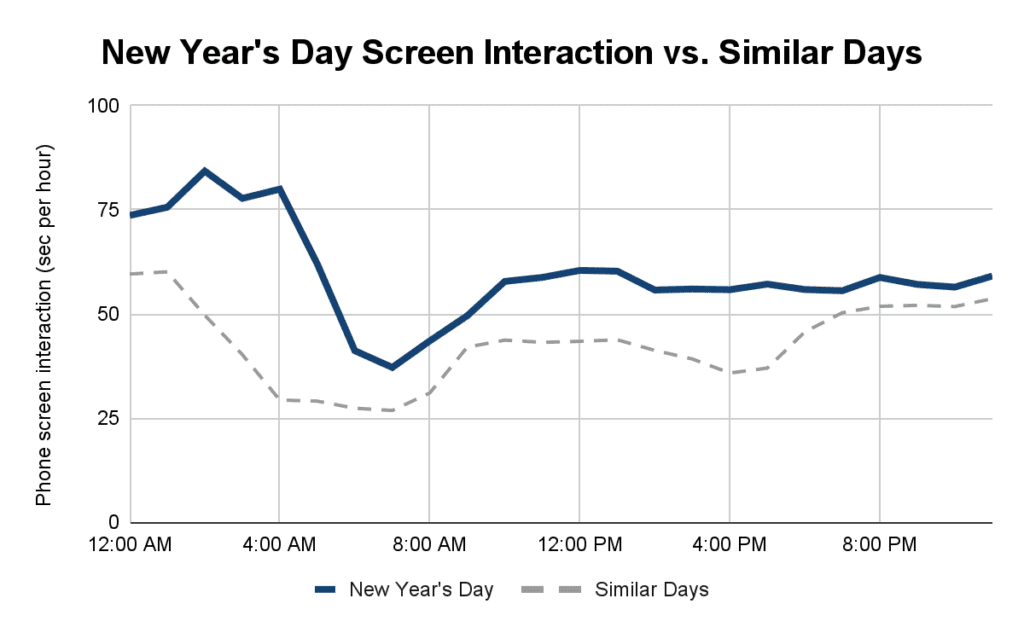
New Year’s also sees increased levels of distracted driving. Overall, distraction is up 39% on New Year’s Day. The distraction pattern that occurs after Christmas Eve largely repeats for New Year’s celebrations.
Hours after we welcome in the new year, there’s a surge in traffic and risky driving. Between 12:00 am and 3:00 am, traffic is 335% heavier. As many drivers leave New Year’s parties, distraction spikes 49%, jumping from 52 seconds per driving hour to 1 minute and 18 seconds. With more drivers and more distraction, hard braking spikes 65%, a common response to risky driving. Drivers who hard brake most often are 1.7 times more likely to crash.
After the early morning surge following New Year’s Eve, distraction continues to climb steadily throughout the day. Once drivers return to the road after 10:00 am, distraction also rises. Between 10:00 am and 4:00 pm, distraction increases by 39%.
New Year’s Day 4-hour speeding shift
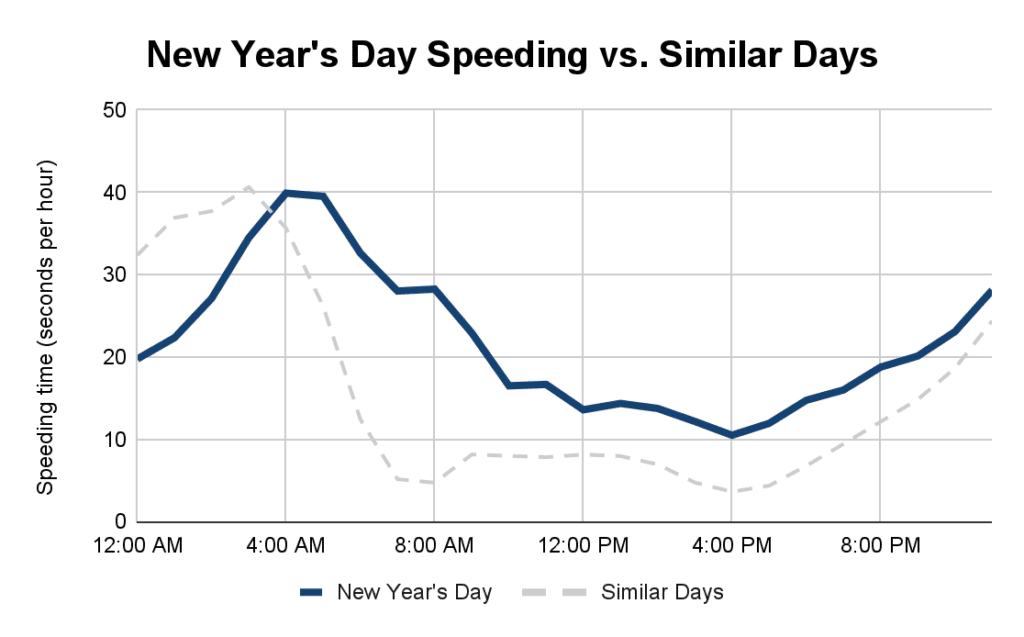
Speeding risk follows a different pattern after New Year’s celebrations compared to the distraction. As the fireworks explode in the sky, speeding is 30% lower for four hours, likely due to the heavier traffic. But at 4:00 am on New Year’s Day, speeding begins to increase. As the morning progresses, speeding above average increases dramatically, spiking sharply at 6:00 am with a 162% gap. At 8:00 am, speeding is nearly 500% above average. Elevated speeding continues through the afternoon and early evening, remaining 114% higher than normal.
Have a safe and happy holiday!
The unique travel patterns and rushed pace of the holidays create a risky mix on the roads. As you head out to celebrate, focus on the road and keep your speed steady and safe. Wishing you a safe and joyful holiday season!