
February Blizzard Analysis: How Drivers Responded to a Historic Northeast Storm
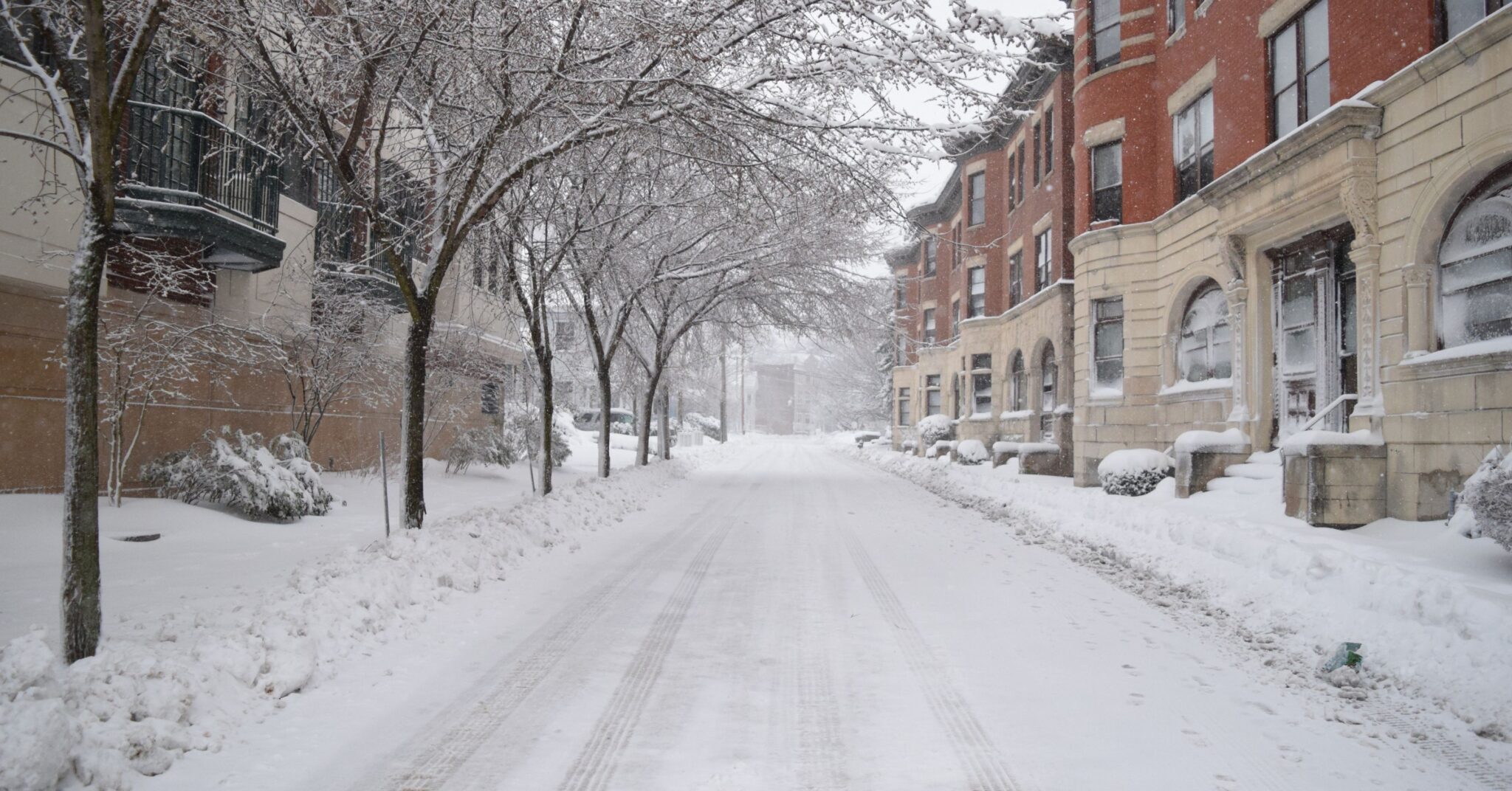
On Monday, February 23, 2026, a powerful winter blizzard swept through the Northeast, intensifying overnight and peaking during the morning commute and early afternoon in both Boston and New York City.
Heavy snow bands created near-whiteout conditions and hazardous roadways by mid-morning. By the time the storm tapered off, Boston had recorded 17 inches of snow, while New York City accumulated nearly 20 inches. The storm led to widespread closures, suspended transit service, and strong advisories from Massachusetts Governor Maura Healey and New York Governor Kathy Hochul urging residents to stay off the roads.
Did drivers adhere to those warnings? And how did behavior change among those who ventured out?
Using CMT’s AI road safety platform, we analyzed traffic volume and driving behavior in Boston and New York City on Monday, February 23, and compared the findings to the previous three Mondays in February. The results reveal just how dramatically driving patterns shifted during the storm.
Overall, drivers largely followed directives to stay home. Across both cities, miles driven fell sharply, down 85% in Boston and 82% in New York City. Speeding declined significantly as traffic volumes dropped. However, among the drivers who remained on the road, phone distraction increased.
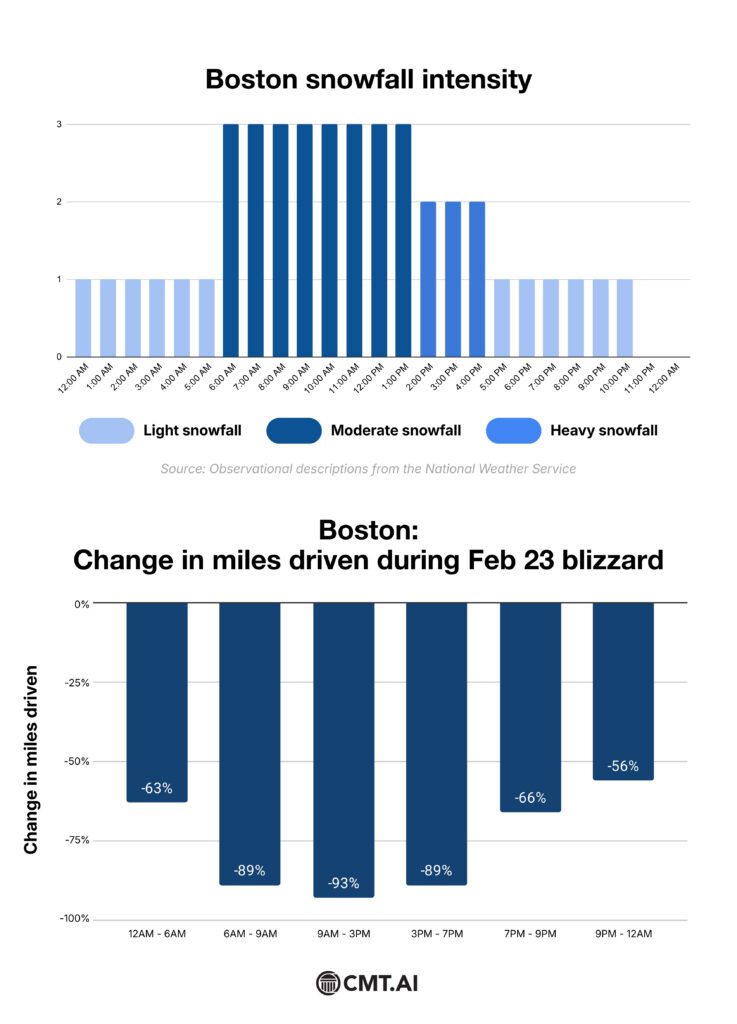
In Boston, traffic patterns closely mirrored snowfall intensity. From midnight to 6:00 a.m., traffic was down 63% compared to typical Monday levels. Heavy snow began falling around 6:00 a.m., and during peak normal commuting hours from 6:00 a.m. to 9:00 a.m., traffic dropped 89%. From 9:00 a.m. through the early afternoon, when snowfall was at its heaviest, traffic was down 93%.
Snowfall intensity began to decline after 2:00 p.m., but traffic remained suppressed throughout the evening. By 7:00 p.m., volumes were still down 89%. As snow transitioned to lighter conditions, traffic gradually rebounded but remained well below normal, down 66% between 7:00 p.m. and 9:00 p.m., and 56% from 9:00 p.m. to midnight. Snowfall finally tapered off completely around 11:00 p.m.
The recovery was gradual. On Tuesday, February 24, traffic remained 38% below pre-storm levels, reflecting continued caution and cleanup efforts. By Wednesday, volumes had returned to typical weekday patterns.
The reduction in traffic aligned with a dramatic drop in speeding. In this analysis, CMT defines speeding as the percentage of driving time spent exceeding the posted speed limit by 9.3 mph for 5 seconds or more.
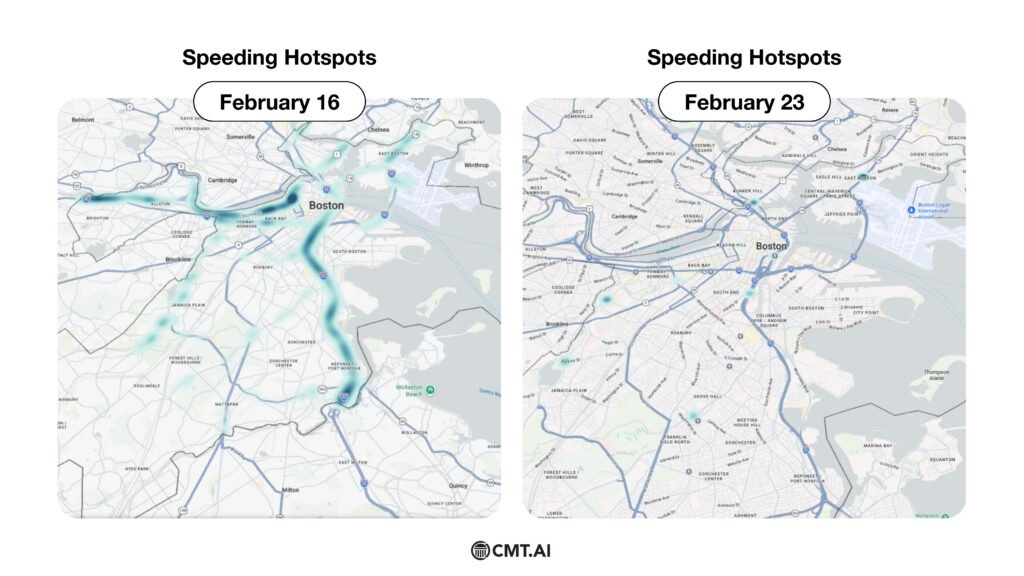
Overall, speeding in Boston was down 66% for the day. On typical Mondays, drivers spend 1.88% of their driving time speeding. During the blizzard, speeding levels fell to 0.64%. During the height of the storm from 6:00 a.m. to 9:00 a.m., speeding declined 98%, dropping from 1.65% of driving time to just 0.04%. As snowfall eased later in the day, speeding remained substantially below normal, down 76% in the evening hours.
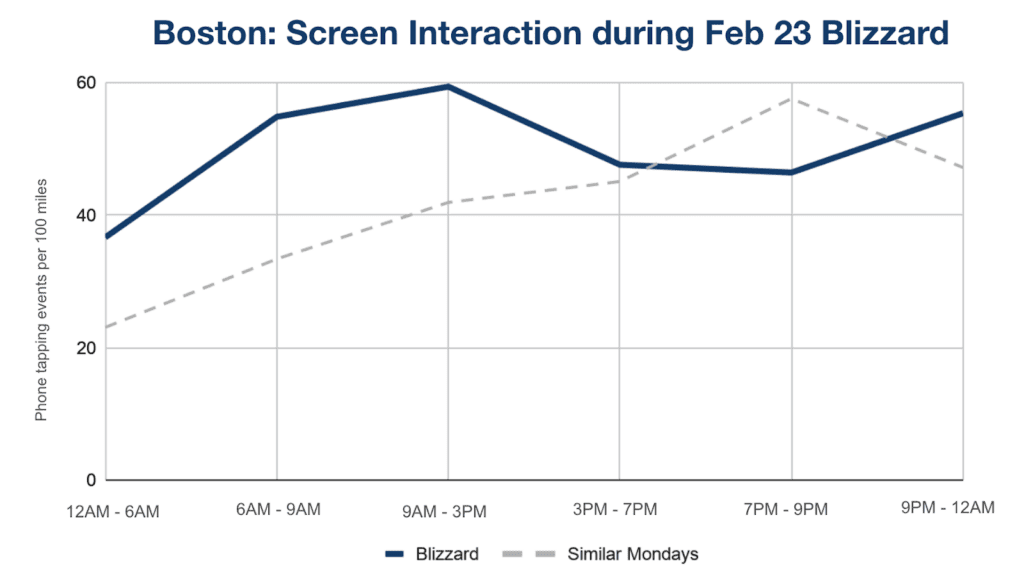
Distraction told a different story. In this analysis, distraction is measured as the number of phone tapping events per 100 miles driven. For drivers who were on the road in Boston, phone distraction increased. Overall, phone tapping events per 100 miles driven rose 18.4%. During the peak storm hours from 6:00 a.m. to 9:00 a.m., distraction surged 64.2%. From 9:00 a.m. to 3:00 p.m., distraction remained elevated at 41.7%. During this period, drivers typically experience 42 phone tapping events per 100 miles. During the blizzard, that figure rose to 59 events per 100 miles. Notably, this increase occurred with a dramatically reduced driving population. One possible explanation for the increase in distraction is that with fewer vehicles on the road and reduced visibility, drivers may have relied more heavily on navigation tools, checking for alternate routes amid road closures and rapidly changing conditions.
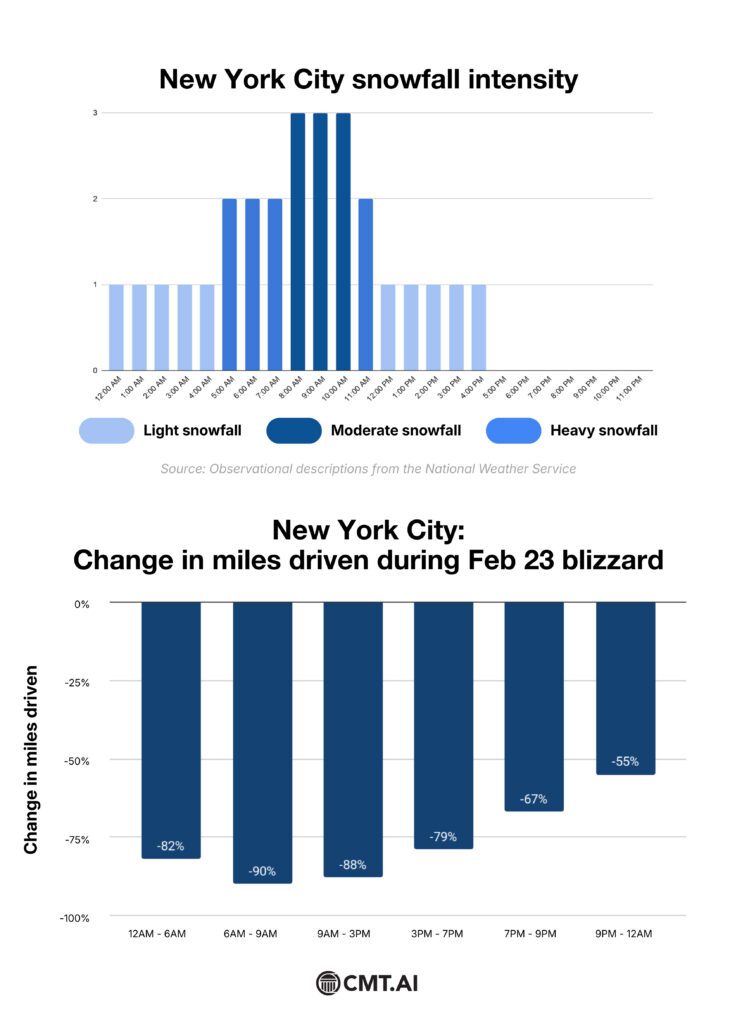
In New York City, the storm’s timing differed slightly, with heavier impacts beginning earlier and significant snowfall also affecting the city on February 22. As a result, traffic declines began overnight and were even more pronounced. Overall, traffic was down 82% compared to typical Mondays.
During the heaviest snowfall after 8:00 a.m., traffic fell 88%. As snow intensity eased in the afternoon, traffic volumes remained well below normal but gradually increased. From 7:00 p.m. to 9:00 p.m., traffic was down 67%, and during the late-night hours, volumes were 55% below typical levels.
The recovery extended beyond the day of the storm. Traffic remained 32% below typical levels on Tuesday and was still 17% below normal on Wednesday.
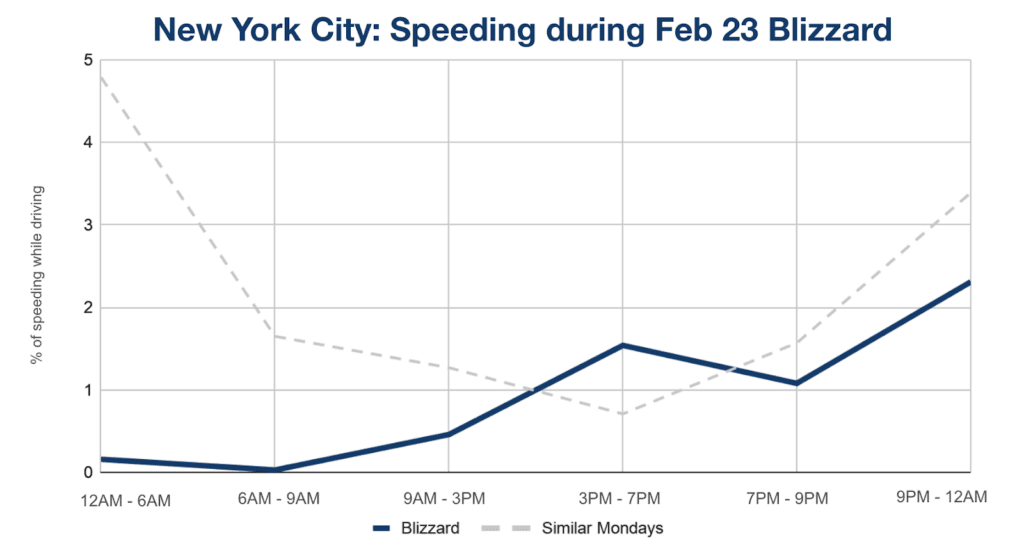
Speeding in New York followed a nuanced pattern. During the overnight and early morning hours, speeding declined 98%. From 9:00 a.m. to 3:00 p.m., speeding was down 64%. On a typical Monday, New York City drivers spend 1.27% of driving time speeding. During the blizzard, that figure dropped to 0.46%
However, from 3:00 p.m. to 7:00 p.m., while traffic remained 67% below typical levels, speeding increased sharply. During this window, speeding rose 117% compared to normal, increasing from 0.71% of driving time to 1.54%. With significantly fewer cars on the road, some drivers appeared to take advantage of open lanes. Between 7:00 p.m. and midnight, speeding fell back to reduced levels, down 31%.
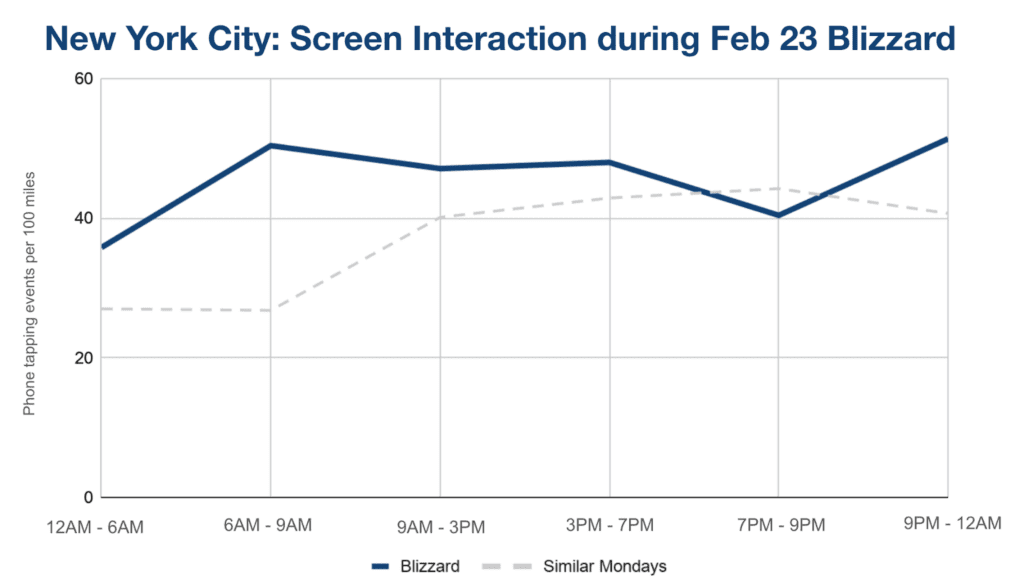
Like Boston, New York City also experienced elevated distraction among drivers who remained on the road. Overall, phone tapping events increased 20.4%. From 6:00 a.m. to 9:00 a.m., distraction surged 88%, rising from 27 phone tapping events per 100 miles to 50. Although the early morning spike subsided, distraction levels remained more than 17% above normal for much of the day. From 7:00 p.m. to 9:00 p.m., phone tapping events declined 8.9% as some traffic volume returned.
The February 23rd blizzard demonstrates how extreme weather significantly reshapes driving behavior. Most drivers clearly adhered to public safety guidance and stayed off the roads, resulting in dramatic reductions in traffic volume and overall risk exposure. While distraction increased among the limited number of drivers who traveled during the storm, the broader story is one of strong compliance, reduced speeding, and meaningful decreases in total roadway activity during hazardous conditions.