
Road Risk Alert: Distraction’s up over 7% on Christmas and New Year’s
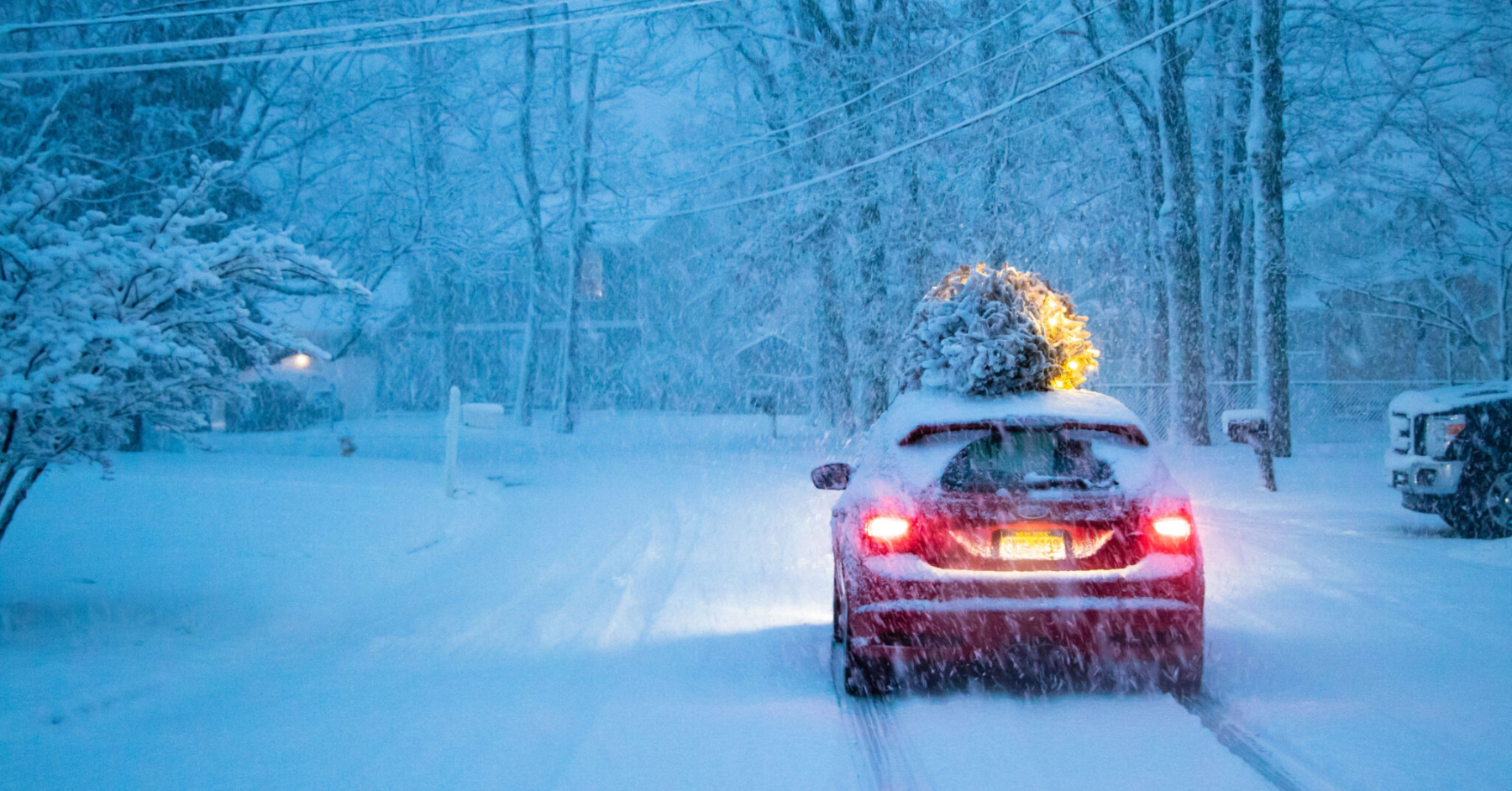
The most wonderful time of the year is here, and travel picks up as families come together for the holidays. Despite the hectic pace of holiday travel, Christmas sees fewer serious crashes than the summer holidays. From 2021-2023, FARS data shows that traffic fatalities on Christmas were 4% lower than the November-January daily average.
But fewer crashes doesn’t mean road risk disappears. Fatal crashes on Christmas are more likely to involve risky driving — speeding-related fatalities rise 7% and distraction-related fatalities increase 5.5%. New Year’s Day follows a similar pattern, with speeding-related fatalities jumping 33% compared to the winter average.
CMT’s latest analysis looks at distraction and speeding trends across 33 million trips on Christmas and New Year’s Day from 2022 to 2024. We compared these holidays to similar days in December and January.
CMT defines screen interaction distraction as tapping on the phone while driving over 9 mph, and speeding as driving 9.3 mph over the speed limit for at least 300 feet — about the length of a football field.
Sleigh bells ring, and phones ping. Distraction rises 7.1% on Christmas.
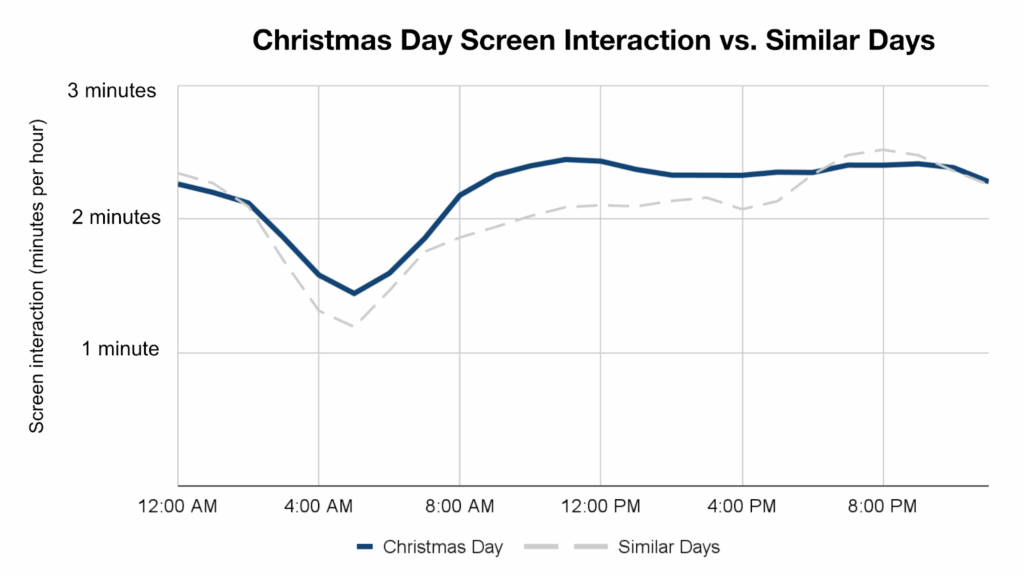
Drivers are significantly more distracted on Christmas, with distraction up 7.1% overall. CMT estimates that this rate of elevated distraction was responsible for an additional 700 crashes, 400 injuries, and 3 fatalities on Christmas Day from 2022 through 2024.* CMT has found that for every 10% increase in distracted driving, the injury and fatality rate increases 1.53%.
The morning sees the sharpest increase. Between 8:00 a.m. and 12:00 p.m., distraction jumps 17.7%, with screen interaction rising from 2 minutes to 2 minutes and 22 seconds per driving hour. This likely reflects the morning travel window as people head to holiday gatherings.
In the afternoon, distraction eases but stays elevated. From 2:00–3:00 p.m., distraction is still 8.4% above average. At 4:00 p.m., distraction normally dips, but it’s still 11.2% higher on Christmas. As the day winds down and drivers likely wrap up their holiday plans, distraction returns to average after 6:00 p.m. and then falls below normal for the rest of the night.
Speeding’s up 54.1% on Christmas

Drivers also speed more on Christmas. Speeding is 54.1% higher than on a typical day, and like distraction, it spikes in the morning. At 8:00 a.m., speeding rises 103.2% above average, with drivers spending 4 minutes and 49 seconds speeding — more than double the usual 2 minutes and 22 seconds. From 8:00 a.m. – 12:00 p.m., when distraction is also elevated, speeding stays 76% above normal.
Noon stands out as a particularly risky point in the day. Speeding is up 74.4%, and distraction is up 15.7%. Traffic volume is also 91% higher than the rest of the day. With more drivers and more risky behavior, hard braking spikes 10%. Hard braking is a common response to speeding or distraction — and drivers who hard brake most often are 1.7× more likely to crash.
By 3:00 p.m., speeding surges again, climbing to 101.6% above average and staying more than 90% higher into the early evening. By 7:00 p.m., the spike begins to taper off, but speeding remains elevated during every hour of the day.
New year, same risky habits. Distraction is up 7.9% on New Year’s Day.
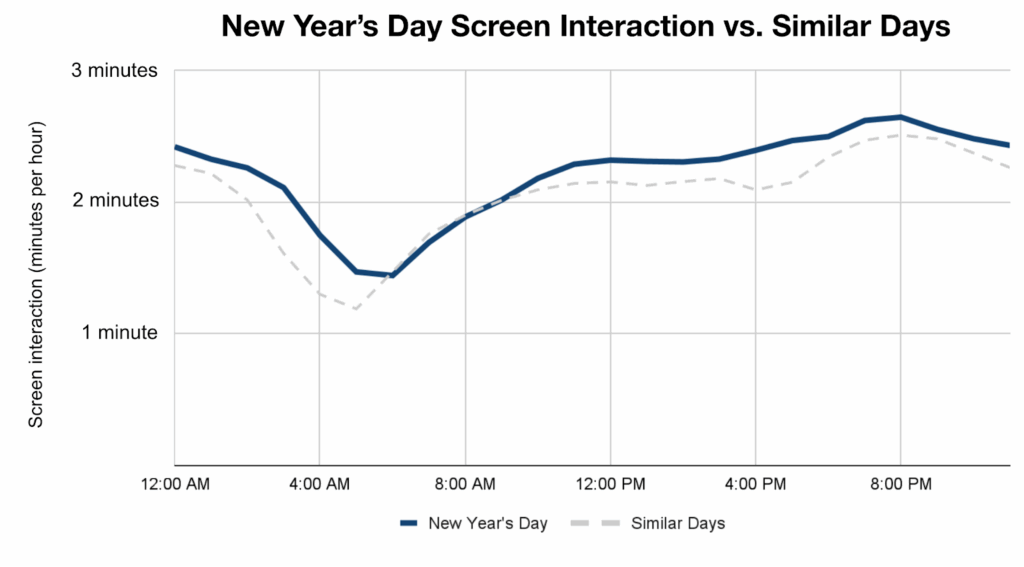
Road risk on New Year’s Day follows a different pattern than Christmas, but distraction and speeding are still up. Drivers are 7.9% more distracted overall. After the ball drops at 12:00 a.m., as people are heading home, distracted driving is up 6.2%. It climbs 12.3% through 3:00 a.m., reaching 2 minutes and 17 seconds of distraction per driving hour. Traffic volume also surges 227% during this window as people are likely heading home from New Year’s Eve parties.
The early morning hours also bring a sharp rise in sudden hard braking. From midnight to 2:00 a.m., your chances of seeing someone forced to slam on the brakes increase by 180%.
Distraction continues to climb through the early morning hours before leveling off around 6:00 a.m. Late morning sees another bump. Between 10:00 a.m. and 1:00 p.m., distraction increases by 6.8%.
Speeding surges 26.7% on New Year’s Day
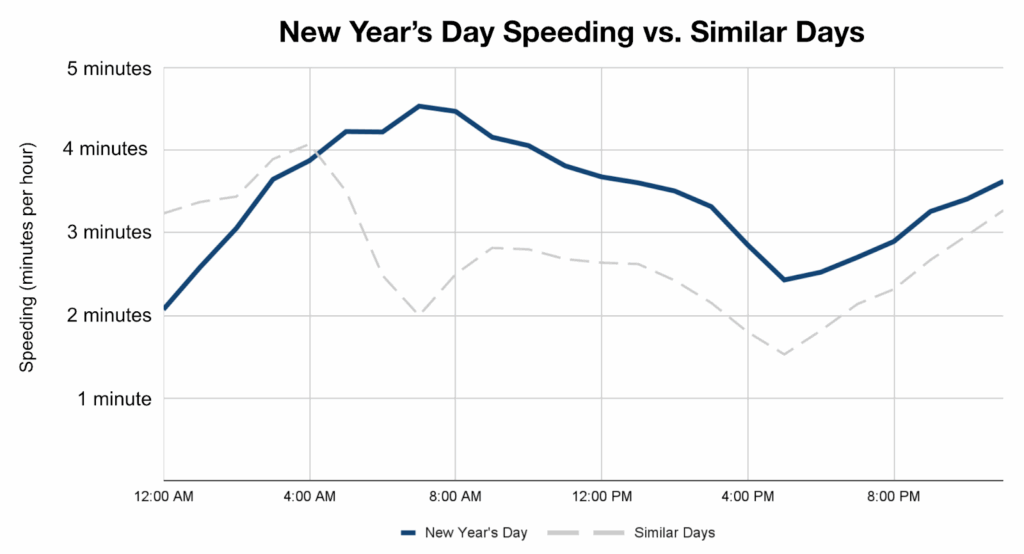
On New Year’s Day, speeding is up by 26.7% compared to similar days. But the new year didn’t kick off that way. Between 12:00 a.m. and 3:00 a.m. — the late-night hours after New Year’s Eve — speeding actually fell 27.1%.
Once the early risers get on the road, speeding picks up sharply. At 7:00 a.m., speeding spikes 127%. Between 10:00 a.m. and 1:00 p.m., it remains significantly elevated, up 41% from 2 minutes and 41 seconds of speeding per driving hour to 3 minutes and 47 seconds. The increase continues through the afternoon, with speeding climbing 47.5% between 3:00 p.m. and 7:00 p.m.
Celebrate the holidays safely. Cheers to 2026!
When risky driving increases, so does crash risk. As you head out for your holiday travels, stay focused, stay alert, and stay safe. Have a safe and wonderful holiday!
*Estimates based on the change in crash rate from distracted driving and data from NHTSA’s report The Economic and Societal Impact of Motor Vehicle Crashes