
Road Risk Alert UK: Distraction climbed 14% as the UK solar eclipse reached its peak
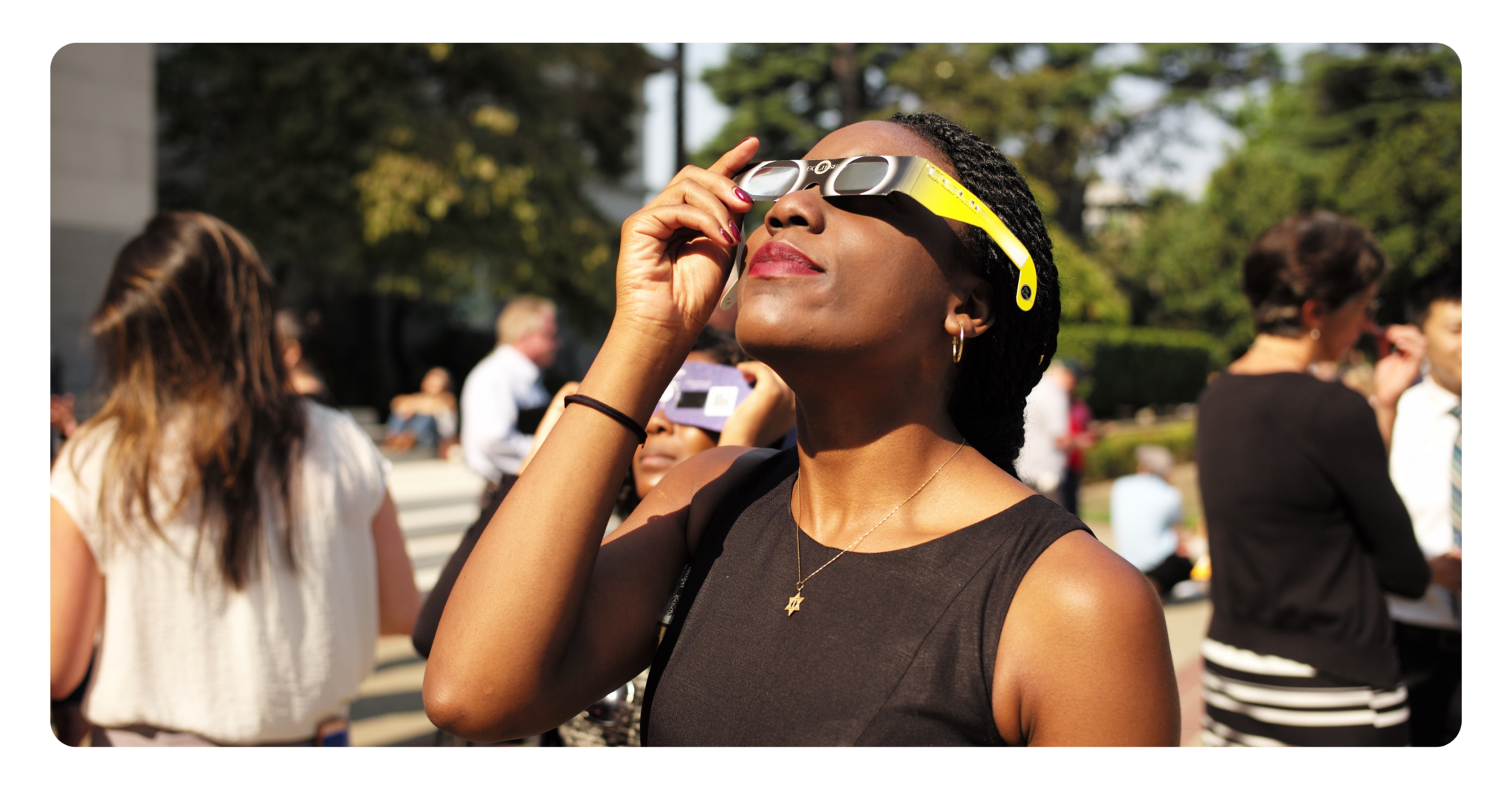
On Wednesday, August 12, the UK experienced its most significant solar eclipse since 1999, with the Moon covering more than 90% of the Sun across the country.
Interest had been building for days, with viewing events selling out and eclipse glasses in short supply. Across the UK, the eclipse overlapped with the evening commute, beginning shortly after 6:00 p.m., reaching maximum coverage shortly after 7:00 p.m., and ending around 8:00 p.m.
Solar eclipses have been linked with increased road risk. A JAMA Internal Medicine study found that fatal-crash risk was 31% higher during the three days surrounding the 2017 total solar eclipse in the US. Researchers pointed to heavier traffic, unfamiliar routes, speeding, distraction, and unsafe roadside viewing as possible factors.
Ahead of the eclipse, GEM Motoring Assist warned drivers not to use a phone or camera to capture the event from behind the wheel. The warning raised a question: Did risky driving increase as the eclipse unfolded? To find out, CMT analyzed more than 9 million trips to see how phone distraction and hard braking changed as the eclipse unfolded. The analysis compared both behaviors during each hour of August 12 with the same hours on similar Wednesdays in the surrounding weeks.
CMT defines screen interaction as tapping on a phone while driving at least 9 mph. Hard braking is braking sharply for at least 0.6 seconds, reducing the vehicle’s speed by more than 12.4 mph. References to individual times, such as 7:00 p.m., represent the full hour beginning at that time.
Distraction rose 9.3% during and immediately after the eclipse
Phone distraction remained close to typical levels earlier in the day, then began rising as the eclipse approached. Hard braking began rising too. From 3:00 p.m. to 6:00 p.m., screen interaction was 4.1% higher than usual. At 5:00 p.m., hard braking was 13% higher, increasing from 4.3 to 4.8 events per 100 km.
Once the eclipse began, distraction spiked. From 6:00 p.m. to 9:00 p.m., screen interaction was 9.3% higher than on similar Wednesdays. Drivers interacted with their phone screens for 45 seconds per driving hour, compared with 41 seconds.
At 6:00 p.m., as the eclipse began across the UK, screen interaction rose 10%, from 39 to 43 seconds per driving hour. At the same time, hard braking was 12.1% higher, rising from 4 events per 100 km to 4.5. Together, the surge in phone distraction coincided with more sudden reactions behind the wheel.
Distraction peaked at 7:00 p.m., as the eclipse reached maximum coverage. Screen interaction was 14% higher than usual—the largest increase of the day—rising from 41 to 47 seconds per driving hour. At 8:00 p.m., as the eclipse came to an end, the increase narrowed to 4%.
A rare event, a familiar risk
The UK isn’t expected to see another solar eclipse with this level of coverage until 2081. Road risk from solar events may be rare, but the insights point to a broader pattern: events that capture attention can change how people drive, especially during busy travel times.